AI-Powered Google Ads Strategy for Small Businesses (Complete 2026 Guide)
In today’s competitive digital landscape, running ads without data-driven intelligence is like driving blindfolded. Platforms like Google Ads have evolved significantly with artificial intelligence, making it easier for small businesses to compete with large brands—if used correctly.
AI-powered Google Ads is not just about automation. It’s about understanding user behavior, predicting intent, and delivering the right message at the right time. For small businesses with limited budgets, this can mean the difference between wasting money and generating consistent leads.
In this detailed guide, we’ll explore how AI works in Google Ads, how to implement it effectively, and how you can build a strategy that actually ranks and converts.
Understanding AI in Google Ads (In Depth)
Artificial intelligence in Google Ads is powered by advanced machine learning models that continuously analyze billions of signals. These include user search queries, browsing history, device type, geographic location, time of interaction, and even behavioral patterns.
Instead of relying on manual inputs, AI processes this massive amount of data to predict which users are most likely to convert. For example, if a user frequently searches for “digital marketing services near me” and visits multiple agency websites, Google’s AI recognizes this as high intent and prioritizes showing relevant ads.
Over time, the system becomes smarter. It learns from past clicks, conversions, and engagement patterns, refining its decisions automatically. This means your campaigns improve continuously without needing constant manual adjustments.
For small businesses, this is extremely powerful because it reduces the need for deep technical expertise while still delivering professional-level results.
Why Small Businesses Must Use AI in Google Ads
Small businesses often operate with tight budgets and limited resources. Traditional advertising methods require constant monitoring, testing, and optimization, which can be time-consuming and inefficient.
AI solves this problem by automating complex tasks and focusing your budget on what works best. Instead of guessing which keywords or audiences will perform, AI uses real-time data to make informed decisions.
Another major advantage is scalability. Even if you start with a small campaign, AI can gradually expand your reach by identifying new audiences and opportunities. This allows small businesses to grow without significantly increasing their workload.
Most importantly, AI reduces wasted ad spend. By targeting only high-intent users and optimizing bids automatically, it ensures that every rupee you invest delivers maximum value.
How AI Improves Google Ads Performance
One of the biggest strengths of AI is its ability to optimize campaigns in real time. Unlike manual strategies, where changes are made based on past data, AI reacts instantly to new signals.
For example, if a particular keyword starts performing better during evening hours, AI will automatically increase bids during that time. Similarly, if a certain audience segment shows higher conversion rates, the system prioritizes showing ads to similar users.
AI also enhances ad creatives. Instead of relying on a single ad copy, Google automatically tests multiple variations of headlines and descriptions. Over time, it identifies the best-performing combinations and shows them more frequently.
Another key improvement is in audience targeting. AI doesn’t just rely on basic demographics; it analyzes behavior and intent. This ensures your ads reach people who are actually interested in your services, not just a broad audience.
Building an AI-Powered Google Ads Strategy (Step-by-Step)
Step 1: Define Clear Business Goals
Before launching any campaign, it’s essential to define what success looks like for your business. Whether your goal is to generate leads, increase website traffic, or drive sales, clarity at this stage helps AI optimize campaigns more effectively.
For instance, if your goal is lead generation, you should focus on conversions like form submissions or phone calls. This allows Google Ads to prioritize users who are more likely to take these actions.
Without clear goals, even the most advanced AI cannot deliver meaningful results because it lacks direction.
Step 2: Choose the Right Campaign Type
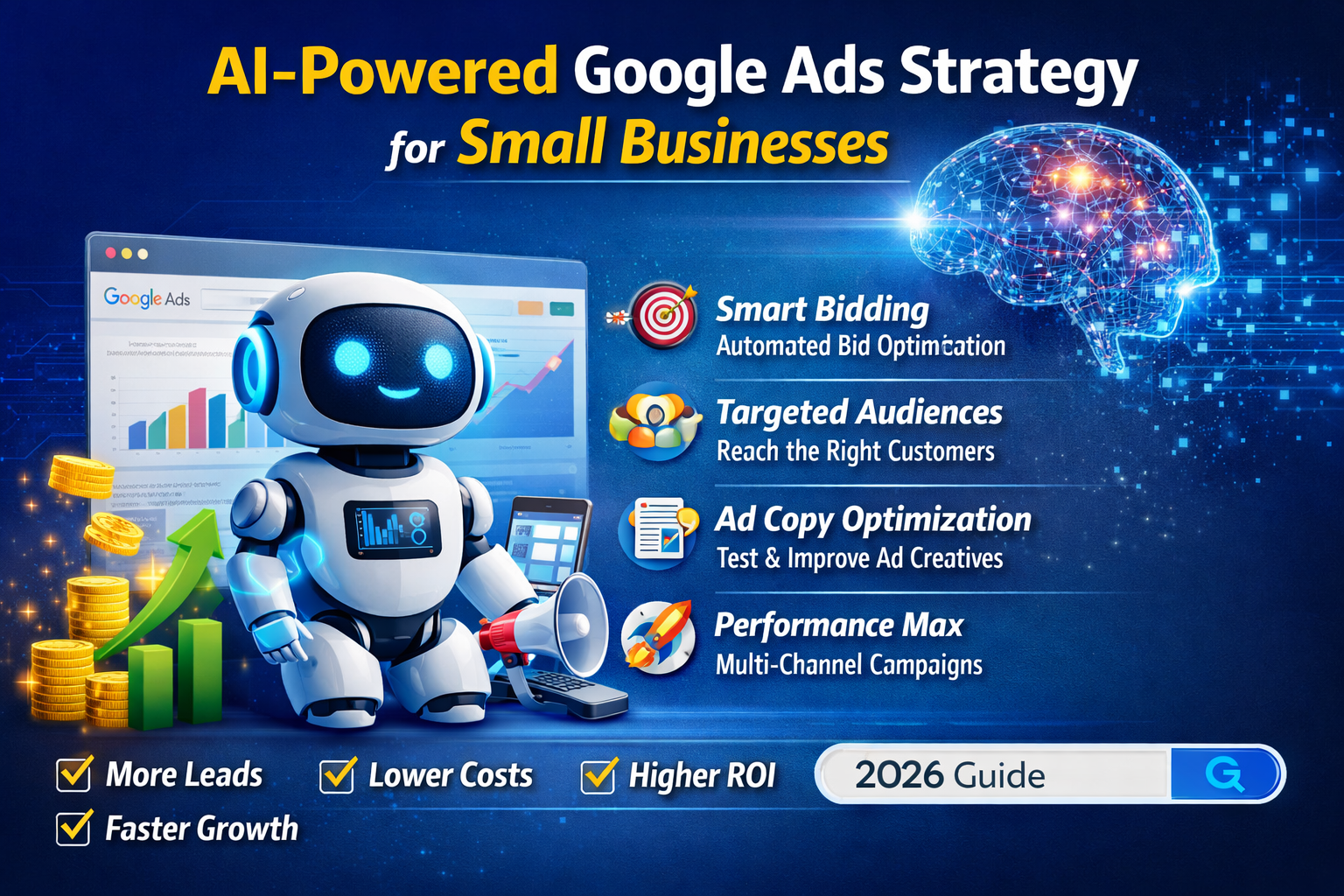
Google offers several campaign types, but AI-driven campaigns like Performance Max have become the most effective. These campaigns use automation to run ads across multiple platforms, including Search, Display, YouTube, and Gmail.
Instead of managing separate campaigns for each channel, Performance Max combines everything into one unified strategy. This not only saves time but also improves efficiency by sharing data across platforms.
For small businesses, this is particularly useful because it simplifies campaign management while maximizing reach.
Step 3: Focus on High-Intent Keywords
Keywords remain the foundation of any successful Google Ads campaign. However, with AI, the focus shifts from quantity to quality.
High-intent keywords are those that indicate a strong likelihood of conversion. For example, phrases like “hire digital marketing agency in Gurgaon” or “best Google Ads expert near me” show clear intent compared to generic terms like “marketing tips.”
By targeting these keywords, you ensure that your ads are shown to users who are ready to take action, resulting in higher conversion rates and better ROI.
Step 4: Optimize Your Landing Pages
Even the most advanced AI cannot compensate for a poorly designed landing page. Once a user clicks on your ad, the landing page must deliver a seamless and convincing experience.
This includes fast loading speed, mobile responsiveness, clear messaging, and strong calls-to-action. Adding trust elements like customer reviews, testimonials, and certifications can further improve conversion rates.
A well-optimized landing page not only boosts ad performance but also helps with organic SEO rankings.
Step 5: Enable Conversion Tracking
Conversion tracking is the backbone of AI optimization. Without it, Google Ads has no way of knowing which actions are valuable to your business.
By tracking events such as form submissions, phone calls, and purchases, you provide the data needed for AI to learn and improve. Over time, this leads to better targeting, smarter bidding, and higher conversions.
Skipping this step is one of the biggest mistakes small businesses make.
Step 6: Allow Time for Learning
AI systems require time to gather data and optimize performance. During the initial phase, often called the learning period, results may fluctuate.
It’s important not to panic or make frequent changes during this time. Constant adjustments can disrupt the learning process and delay optimization.
Instead, allow at least 1–2 weeks for the system to stabilize and start delivering consistent results.
Advanced AI Strategies for Better Results
Once your basic setup is complete, you can take your strategy to the next level by leveraging advanced AI features.
Predictive targeting allows Google to identify users who are most likely to convert based on past behavior. Automated budget allocation ensures your spending is directed toward high-performing campaigns. Cross-channel optimization helps you reach users across multiple platforms with a consistent message.
These advanced techniques can significantly enhance performance and give you a competitive edge.
Common Mistakes That Hurt Rankings and ROI
Many small businesses fail to achieve results because they overlook key aspects of AI optimization. Frequent campaign changes, lack of conversion tracking, and targeting broad keywords can negatively impact performance.
Another common mistake is ignoring audience signals. Providing data such as customer lists or website visitors helps AI understand your target audience better.
Avoiding these mistakes can make a significant difference in your campaign success.
Conclusion
AI-powered Google Ads is transforming how small businesses approach digital advertising. By leveraging machine learning, businesses can achieve better targeting, improved efficiency, and higher returns on investment.
However, success with AI is not automatic. It requires a clear strategy, proper setup, and patience during the learning phase.
If implemented correctly, AI can become one of the most powerful tools for growing your business in 2026 and beyond.